
Tag Archive for: community

Brayden Becerra

Why I Walk: We Walk to Honor Our Hero

Brayden Becerra

Excerpt: Brayden Becerra was well known and loved for many reasons. His greatest gift in life and beyond was being a giver.

Brayden “Chewey” Becerra came from a large family. He had a great smile, a sense of humor and made a tremendous impact on his relatives and friends.

You could see the difference he made to others throughout his life. When he passed in September 2024, more than 1,000 people paid their respects during his honor walk and funeral service.

First Donate Life Legacy Walk

“We are walking at the MTN Donate Life Legacy Walk to create awareness about how important it is to donate your organs and save the lives of others,” said Brayden’s mother, Stephanie Becerra. “God gave us the opportunity to help others and extend their lives.”

Stephanie says her family prays the donor recipient is doing well. “We hope the organ recipient’s family can avoid the pain of losing a loved one with Brayden’s gifts.”

An Immense Pride

The family is proud that Brayden was a registered organ, eye and tissue donor. He joined the registry when he got his driver’s license at 16. “It was 100% his decision,” said Stephanie. “He was a true giver even at that young age.”

Brayden was very close to his siblings Zach and Breanna. “He was a great person and always so giving,” Breanna said. “He took great care of his body and was able to donate six organs.”

Brayden “Chewey” Becerra, donor hero.Brayden Brayden

What is one thing Brayden’s family wants people to know? “It’s never too late to become a registered organ, eye and tissue donor,” said Stephanie. “He was a donor hero, and this is the kind of man his family and friends will remember him being.”

Donate Life Legacy Walk is June 7

Midwest Transplant Network invites you to join us for our annual Donate Life Legacy Walk on June 7, from 6-9 p.m. This free community event features a live concert, food trucks with items for purchase, our Tribute Trail honoring donor heroes and transplant warriors, and the opportunity for those impacted by organ, eye and tissue donation to gather together at the National WWI Museum and Memorial. Come celebrate the gift of life while helping raise awareness about the importance of registering as organ, eye and tissue donors.

The Donate Life Legacy Walk does not include a formal, timed walking event. Participants are encouraged to walk the Tribute Trail at their leisure. A path is lined with Tribute Trail signs, giving donor and recipient families the opportunity to stroll the site in celebration and remembrance.

Register here: https://runsignup.com/Race/MO/KansasCity/MTNLegacyWalk

Donor Hero, Transplant Warrier, MTN Legacy Walk 2025

Why I Walk: The Annual Walk Means Everything to this Mom

Donor Hero, Transplant Warrier, MTN Legacy Walk 2025

Ryan and Natalie Stoway

The first Saturday in June isn’t just a regular weekend. It’s a day filled with hundreds of people gathering to honor and celebrate the lives of donor heroes, transplant recipients, people who are waiting for a transplant, and many others at the annual Midwest Transplant Network Donate Life Legacy Walk in Kansas City, Missouri.

The event means different things to the people who are walking. MTN Ambassador Alexis Stoway says, “I walk at the Legacy Walk every year for both my children. My daughter, Natalie, is a kidney and a tissue recipient, and my son, Ryan, was a donor hero when he passed in 2021. He was able to donate a tendon and a ligament to his sister, and she received it in her knee.”

After losing her son Ryan, Alexis said she finds her emotions go up and down. “I know that for three hours on that day, during the Legacy Walk, that I’m at peace. It’s amazingly incredible to see the donor hero families celebrating their loved ones, and then you see the recipients also celebrating their second chance, their second chance at life, their second chance at recovery, their second chance at sight. Seeing all of them and everybody from every walk of life, no matter who you are, it doesn’t matter because everybody is there for one reason.”

Part of the team
Who joins Alexis during the walk? “Family, friends, Ryan’s friends, Natalie’s friends, everybody that wants to celebrate. My kids, aunts, uncles, cousins and friends,” she said. “There’s been anywhere from 40 to 70 of us in our group. That’s what we come to do and it’s a place for everybody to be together as one.”

Alexis said it brings a lot of comfort knowing that a donor hero is not forgotten and is still appreciated whether it’s 10, 15 or 20 years down the road. They’re still being celebrated for the gifts they have given.

Her mission
Alexis and her family proudly wear their MTN T-shirts when they are out, or at school and even on vacation. The family is happy to participate in the conversations that start because of their shirts, and the Donate Life green bracelets they wear that honor donors and give hope to those waiting for the gift of life.

“We wore our Give Hope Share Life sweatshirts at Dollywood recently. We were stopped twice by people there. One person was waiting for a liver and thanked us for bringing awareness and for also wearing our green ribbons. Another person had a liver transplant 20 years ago. He had never seen anybody wear anything like that and he was so proud.”

Legacy Walk, Midwest Transplant Network

Ryan’s parents and sister join the MTN Legacy Walk every year.

Plan to join us
Midwest Transplant Network invites you to join us for the ninth annual Donate Life Legacy Walk on Saturday, June 7, from 6–9 p.m. at the National WWI Museum and Memorial in Kansas City. The celebration welcomes donor hero families, transplant recipients, people who are on the waiting list and many more who support the mission of organ, eye and tissue donation.

This year, the live concert features local band Twice on Sunday, several food trucks with snacks and meals for purchase, the MTN Tribute Trail honoring loved ones, and the opportunity to make memories. The walk is in a new spot at the Memorial. Look for us on the south lawn near the entrance. There are lots of trees for more shade, a natural amphitheater and a smaller, cozier space. Please plan to attend and celebrate the gift of life while helping raise awareness about the importance of being an organ, eye and tissue donor. Learn more and register for the Legacy Walk at mwtn.org/legacy-walk 


Watch and listen

Take a moment to watch and listen as Alexis tells us why she walks.


people next to a poster for Greater Kansas City Black Nurses Association

Building Pathways to Trust with Black Nurses Association
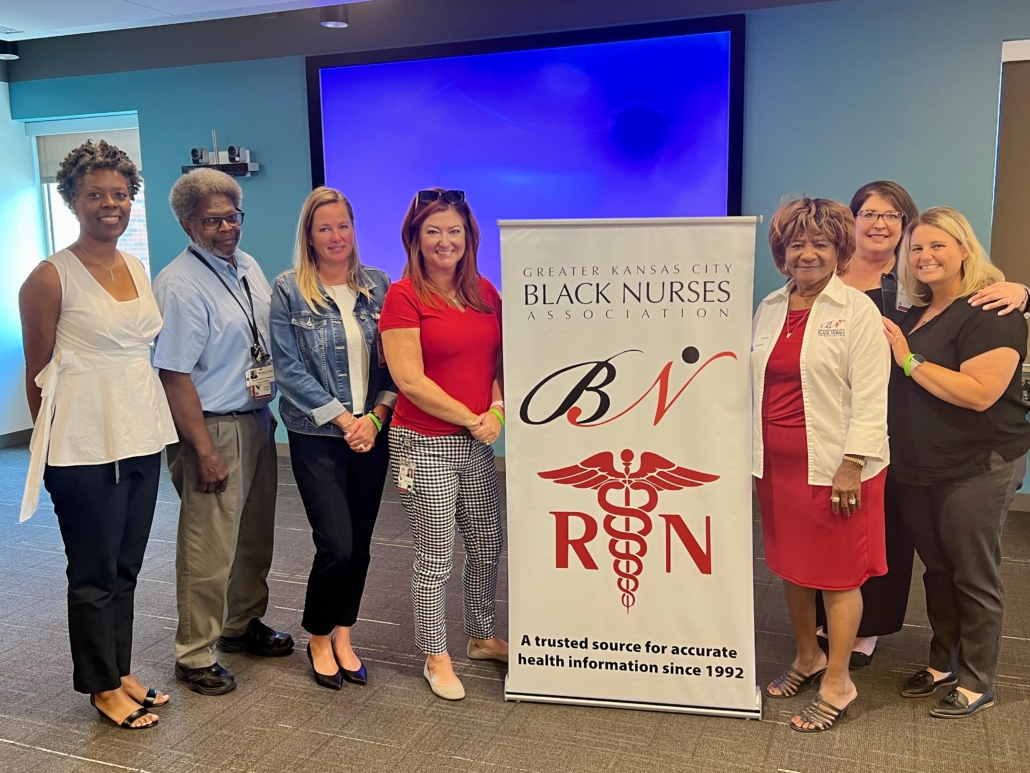
people next to a poster for Greater Kansas City Black Nurses Association
Midwest Transplant Network (MTN) hosted the Greater Kansas City Black Nurses Association (GKCBNA) during National Multiethnic Donor Awareness Month for a staff lunch and learn called Pathways to Trust.

GKCBNA was founded in 1992 by Deborah Washam, RN, MSN, CCM. The organization works to educate the public about healthcare, promote public health, dispel myths and more.

Washam visited MTN to present disparities in healthcare and organ, eye and tissue donation that impact African American communities. She educated attendees about a range of donation-related myths such as distrust in medical care and fears that organs may not be viable because of co-morbidities, that Black people are “last on the list for organ transplants” and that you have to be wealthy to receive or donate a kidney.

She also informed MTN staff members that 30% of the people waiting for a lifesaving kidney transplant are Black, despite Black people making up only 13% of the U.S. population. Although organ donors and their recipients don’t have to be of the same race, Black people are more likely to have a successful match with another Black person based on certain genetic markers and antibodies.

Washam discussed pathways for building trust and changing viewpoints about donation and transplantation to include community education and outreach, listening, and sharing truths and information. MTN staff members agree that working together with Washam and GKCBNA will help promote stronger healthcare and increase the number of transplants.

Our thanks to Washam and the GKCBNA for this informative and inspiring lunch and learn conversation.
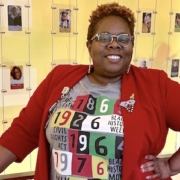

Brande Johnson

What Black History Month Means to Me

“We must never forget that Black history is American history. The achievements of African Americans have contributed to our nation’s greatness.” — U.S. Rep. Yvette Clarke of New York

For me, Black History Month is a time of reflection: an opportunity to embrace my culture and display my pride for the trials, the joy, the pain, the courage and the sacrifice of those who paved the way before me.

Growing up, we learned about the same Black historical figures year after year, and it was somewhat mundane. However, as an adult, I am able to dig deeper and learn all that I can about those who have left their indelible imprint that affects everyone in one way or another.

As an MTN employee, I was afforded the opportunity to shine a spotlight on an individual who contributed to medical advances. I decided to feature Dr. Jane Cooke Wright, who I never knew was such a pioneer in the advancement of chemotherapy. Learning about her expertise and innovations, which have an impact on so many, further solidified for me the continued importance of studying Black history — no, American history. Everyone could better understand the incredible contributions people of color have made to the collective American experience.

The only reason I can stand tall and accomplish my endeavors is because I stand on the backs of those who came before me. I was inspired to find out that my paternal grandfather was a humanitarian and local activist throughout the 1970s. He sought to bring about positive social change in Kansas City, Missouri, which laid a foundation that still benefits people today. That is what Black History Month affords us — the ability to gain knowledge that would otherwise not be known. That is why it should be consistently taught versus distributed in a highlight reel for twenty-eight days.

Being a Black woman is not only a joy and an honor, but it is who I am every single day. I cannot change it and, honestly, I do not have an ounce of desire to do so. There is immense pressure accompanied by underlying distress, violence and vile treatment that is bestowed upon Black people. It is terrifying; however, I wake up every morning grateful for who I am. That is quite literally Black history personified.